

If you’ve been curious about ketamine-assisted psychotherapy, or KAP for short, but aren’t quite sure what to make of it, you’re in good company. Most people have heard the word ketamine and immediately pictured something very different from a therapy session. So before anything else, let’s talk about what ketamine actually is, because the context matters enormously.
A word on the drug itself
Most people hear “ketamine” and think one of two things: illegal party drug or horse tranquilizer. Neither is wrong, exactly. But neither tells the whole story either.
Ketamine was first synthesized in 1962 and developed as an anesthetic with a specific and valuable quality: it doesn’t suppress the respiratory system the way most anesthetics do. That made it ideal for situations where constant monitoring wasn’t possible. During the Vietnam War, it became known as the “buddy drug.” Soldiers carried it on their person and could administer it to an injured fellow soldier in the field without needing a ventilator or a surgical team standing by. It’s been on the World Health Organization’s list of essential medicines ever since, and its use has only expanded from there.
What’s also been discovered over the years is that ketamine has psychedelic properties at certain doses. Not in the way popular culture imagines, not a full-blown trip, but a shift in perception that can loosen the grip of stubborn thought patterns and allow people to see what’s underneath them. In a therapeutic context, that’s not a side effect. That’s the whole point.
What KAP isn’t
KAP isn’t a quick fix. It’s not a magic door that opens once and reveals everything you’ve been looking for. It won’t solve your problems, resolve your trauma in one go, or hand you a new identity on the other side of a single session.
What it can do, and what I find genuinely remarkable about it, is pull back those stubborn layers of thought patterns and habits that make it so hard to see yourself clearly. I like to think of it this way: if your brain is a ball of clay, over time it can get harder and harder to mold. Old patterns calcify. Ways of thinking that once served you become grooves you can’t seem to get out of, no matter how much insight you have about them.
Ketamine acts as a softener. It makes the clay more malleable, temporarily, and in that window you have a chance to reshape parts of the system to function a little more effectively, before the clay starts to firm up again.

What actually happens in a KAP session?
When most people picture ketamine treatment, they tend to think of ketamine clinics: showing up in person, receiving an intravenous infusion, going home a few hours later. That model exists and has its place. But it’s not what I do, and it’s not what KAP is.
This isn’t your typical ketamine clinic
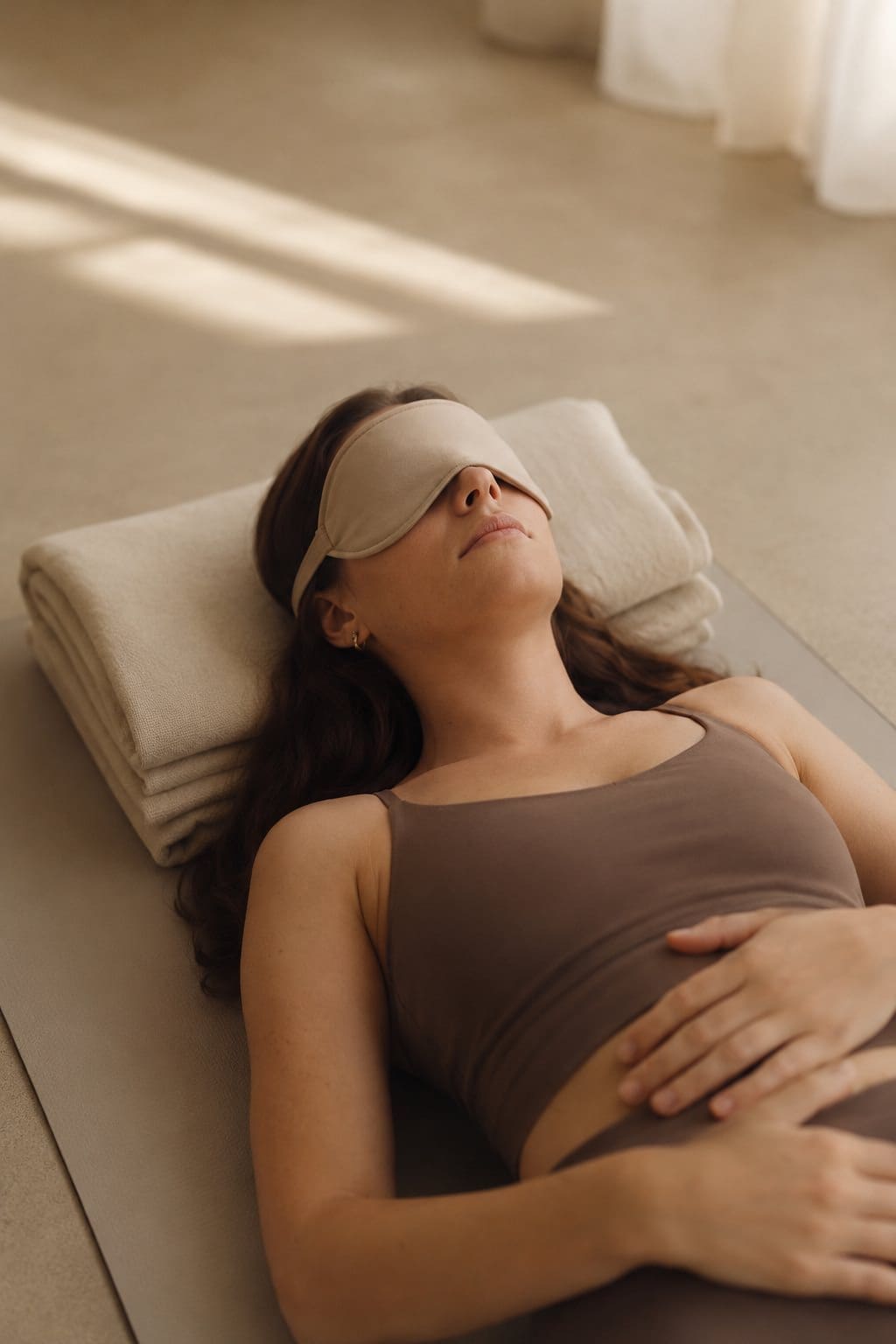
In my practice, as is the case with many KAP providers, ketamine is administered sublingually, via a small lozenge that dissolves under the tongue, from the comfort of your own home. The dosing session itself lasts between one and a half and three hours. You’ll be in a reclining position, with an eye mask and music, while I remain present with you on screen. The experience is largely inward. Most people tend to describe a loosening or a softening of the usual mental chatter, a sense of being able to observe themselves from a little more distance than usual – which is different from how most of us move through our days.
At these doses, it’s calming. Often euphoric. For many people, even just the dosing session brings a temporary but noticeable improvement in mood and an overall sense of wellbeing. But the dosing session is just the entry point. What happens afterwards is where the real work lives.

The neuroplasticity window
Research shows that in the hours and days following a ketamine session, the brain enters a state of heightened neuroplasticity. It’s more open to forming new patterns of thought and behavior than it typically is. Some people find they can absorb new information more easily, approach long-standing problems with a fresh perspective, or access emotional material that previously felt completely out of reach. The window doesn’t last forever, which is exactly why what happens inside it matters so much.
In the days and weeks following a ketamine session, we meet for integration sessions. We process what arose during the experience, connect it to the intentions we set beforehand, and use that neuroplasticity window to actively work on the thought patterns and behaviors that have felt too stuck to move. This isn’t a passive process – it requires showing up and being willing to sit with what surfaced.
Just taking ketamine without that therapeutic container is a bit like softening the clay and then setting it aside. It’ll firm up again. You haven’t actually changed anything. The transformation isn’t in the medicine, it’s in what you build during the window the medicine creates.
What it can look like when it works
I want to share something without identifying anyone specifically, because I think it captures something important about what KAP can open up.
One client came out of a dosing session with something I honestly didn’t expect: not a dramatic revelation, not a flood of suppressed memory, but a quiet and clear recognition of their own resilience. During the experience, what came into focus was how much they’d struggled, how much they’d overcome, and how much courage it had actually taken to get to where they are today. They hadn’t been able to see that before, or at least hadn’t been able to really feel it. The session created enough distance from the usual self-criticism that something more honest could finally surface.
That’s the kind of thing I mean when I say KAP can be meaningful. Not a cure, a different vantage point. And that can look different for every person.
Is ketamine-assisted psychotherapy right for you?
KAP is certainly not for everyone, and there are medical contraindications that a thorough evaluation will screen for. It requires a real commitment to the preparation, the dosing process, and especially the integration work afterward.
But for the right person, at the right time, with the right support, it can be one of the most meaningful parts of a healing process. Not because the medicine does the work, but because it creates enough space for you to finally do it yourself.
If you’ve been stuck in a way that’s started to feel permanent, this might be worth a conversation. Not a guarantee. Just a possibility that deserves to be taken seriously.
References
Domino, E. F. (2010). Taming the ketamine tiger. Anesthesiology, 113(3), 678–684.
World Health Organization. (2023). WHO Model List of Essential Medicines (23rd ed.). WHO Press.
Murrough, J. W., et al. (2013). Antidepressant efficacy of ketamine in treatment-resistant major depression. Biological Psychiatry, 74(6), 388–394.
Dore, J., et al. (2019). Ketamine assisted psychotherapy (KAP): Patient demographics, clinical data and outcomes in three large practices administering ketamine with psychotherapy. Journal of Psychoactive Drugs, 51(2), 189–198.
Pribish, A., Wood, N., & Kalava, A. (2020). A review of nonanesthetic uses of ketamine. Anesthesiology Research and Practice.


